
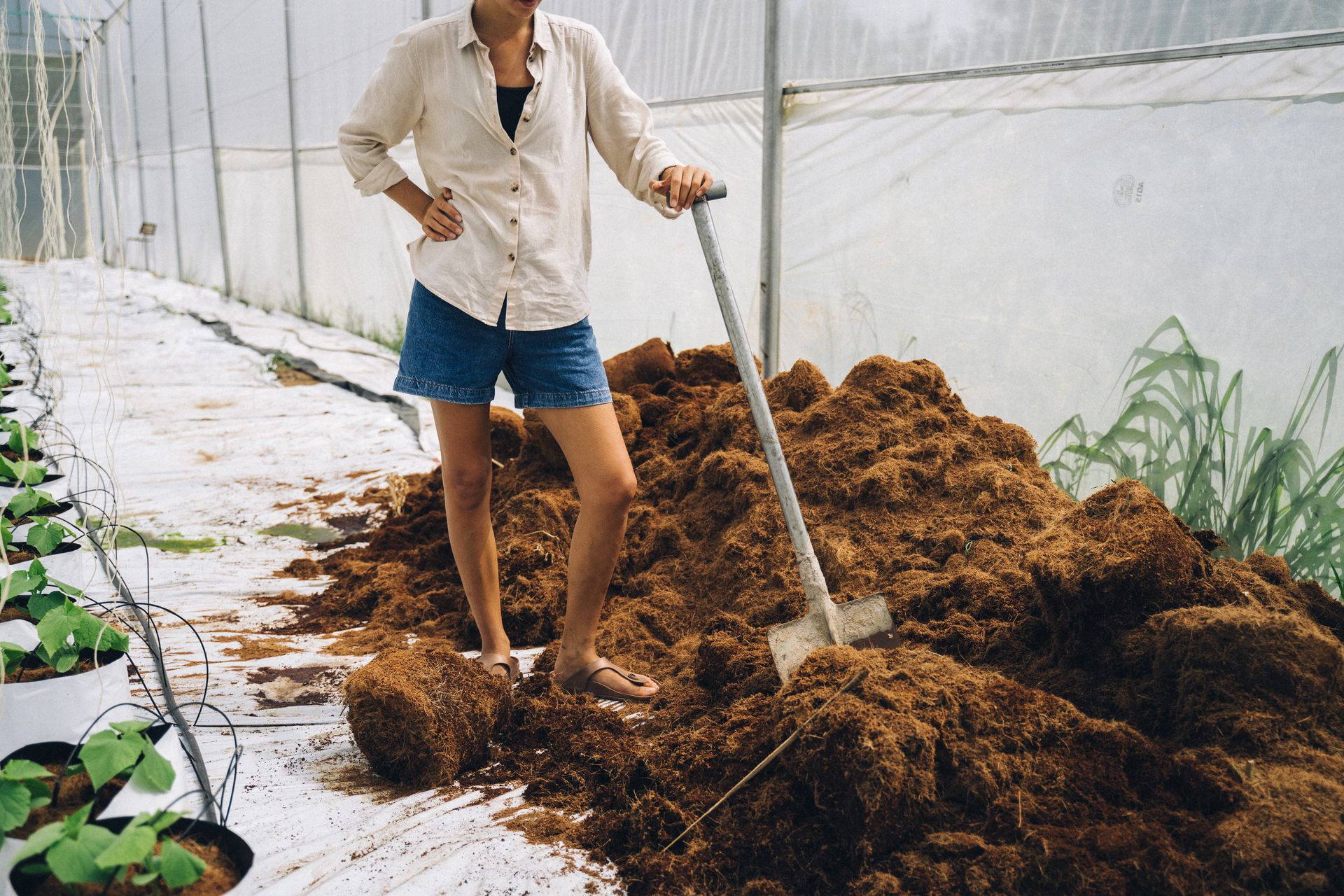
Growing with cocopeat should feel simple. You fill the pot, run irrigation, and watch roots explode. That only happens when the cocopeat is clean, stable, and tested. When it is not, problems creep in quietly as salinity stress, weak seedlings, or strange pH swings that never quite match your fertigation plan.
Here we will walk through how to qualify cocopeat wholesale suppliers with real numbers, not just marketing words. We focus on lab test thresholds for EC, pH, and key ions, what proper buffering really means, and how contamination control protects your crop and equipment. Late summer is a smart time to tighten these specs, since many growers are setting up supply for the next season right now.
Protecting Your Crops with Proven Cocopeat Quality
Cocopeat is the spongy material made from coconut husks. It holds water, keeps air around the roots, and has become a backbone substrate for greenhouses, nurseries, hydroponics, and container production.
When cocopeat is poorly washed or not tested well, you may see:
- High salts that burn roots or slow germination
- pH that drifts and locks out nutrients like iron or phosphorus
- Too much potassium pushing out calcium and magnesium
- Hidden pathogen or weed pressure that builds over time
The goal is simple: turn supplier selection into a clear checklist. That means asking for specific lab numbers for EC, pH, sodium, potassium, and chloride, plus clear buffering and sanitation steps. For export producers like us in Thailand, working closely with coconut farming communities makes it possible to keep that quality traceable and repeatable, batch after batch.
Reading the Lab Report: EC, pH, and Salts That Matter
EC is your first filter. It tells you how salty the cocopeat is. For most crops:
- Sensitive seedlings and hydroponics: aim under about 0.5, 0.8 mS/cm
- Leafy greens and soft herbs: keep EC low and consistent
- Tougher ornamentals or landscape plants: can handle a bit higher, if irrigation water is clean
High EC means roots must fight to pull in water. You may notice poor germination, tip burn, or the need to irrigate more often just to keep plants happy.
Next is pH. Good horticultural cocopeat usually sits around 5.5 to 6.5. Outside that band, nutrients like iron, manganese, and phosphorus get tied up. You might be feeding enough, yet still see pale leaves or purple tints. Liming and buffering help keep pH stable through the whole crop, not only on day one.
Key ions to watch:
- Sodium (Na): keep it low to avoid toxicity and slow root growth
- Chloride (Cl): also should stay low, or you risk leaf burn and poor flavor in some crops
- Potassium (K): naturally high in coco, but too much can block calcium and magnesium uptake
A simple minimum spec table for your RFQs might include:
- EC (method stated, like 1:1.5 or 1:5)
- pH range
- Maximum Na and Cl levels
- Target range for K and basic Ca/Mg balance
This lets you match cocopeat specs to crop sensitivity and to your own water quality.
Comparing Cocopeat Wholesale Suppliers with Hard Numbers
Many suppliers say “low EC” or “triple washed,” but those words mean different things to different people. Use the lab report to make fair comparisons.
Ask each supplier to:
- Provide recent independent lab tests for the exact lot or batch
- State the testing method and extraction ratio so numbers line up
- Confirm that the same testing plan applies all year
When you sign contracts or long-term purchase orders, write in:
- Maximum EC and clear limits for Na and Cl
- Target pH range at delivery
- Rejection rules if a batch comes in out of spec
Season changes in producing countries can affect raw coco and wash water. Monsoon rains, dry months, and heat all play a role. Suppliers with good process control, water treatment, and on-site lab checks are better able to keep your specs steady from one shipment to the next.
On your side, track runoff EC and pH, along with crop vigor and yield. Over time, you can see which supplier’s lab numbers match what you see in the greenhouse.
Inside the Buffering Process: From Raw Fiber to Root-Ready Media
“Washed” and “buffered” are not the same thing. It helps to treat them as two different steps.
- Washing: uses fresh water to rinse out loose salts in the cocopeat solution
- Buffering: uses calcium and magnesium solutions to push Na and K off the cation exchange sites inside the coco structure
A professional buffering process generally includes:
- Screening and grading to get the right particle size and reduce dust
- Applying a Ca/Mg solution at a set EC and for a planned contact time
- Rinsing with good-quality water until target EC and ion ratios are met
When buffering is done well, growers usually see:
- Faster root establishment and less transplant shock
- More stable reaction to fertigation recipes, with less heavy leaching at the start
- Fewer calcium and magnesium issues in high-demand fruiting crops
To check buffering claims, ask for lab data before and after buffering that shows changes in Na, K, Ca, Mg, and EC, plus a short written outline of the process used.
Keeping Media Clean: Pathogen, Weed, and Physical Contaminant Control
Quality is not only about salts. Cleanliness matters just as much.
Main risks in cocopeat supply chains include:
- Biological: fungi, bacteria, nematodes, weed seeds from open drying or dirty storage
- Physical: stones, plastic, metal, glass, big wood pieces that clog drippers or damage filling lines
Best practices at the supplier level usually cover:
- Controlled sourcing of husks from known farms
- Managed drying conditions to keep soil and debris out
- Mechanical screening and metal detection before compression
For sanitation, some producers use steam or heat treatment, or approved chemical methods where allowed, to lower microbial load. Regular microbiological testing helps keep pathogen levels within acceptable limits for export.
Traceability ties it all together. Lot-based tracking from farm to finished bale or grow bag, clear labels with origin, production date, and any treatment applied, all support quick problem solving if an issue appears later. For producers working closely with coconut communities, good contamination control can also support better use of biomass and less waste across the chain.
Building a Future-Proof Cocopeat Sourcing Checklist
A simple step-by-step checklist can turn supplier talks into clear technical decisions.
- Step 1: Define crop-specific limits for EC, pH, Na, K, Cl, Ca, and Mg that fit your water and fertigation plan
- Step 2: Ask every supplier for recent lab tests, written buffering details, and contamination control procedures with each quote
- Step 3: Run trials and track drain EC/pH, root growth, and plant performance across at least one full crop cycle
- Step 4: Lock in specs, test frequency, and quality-based penalties or rewards in your longer-term agreements
When you choose partners, look at more than just the media. Direct links to coconut farming communities, reliable export logistics, and a broader coconut biomass portfolio can make planning and freight smoother. Producers like CP FARMERS, based in Thailand and focused on global coconut derivatives and biomass, work in that space to offer consistent, traceable cocopeat that fits into a wider sourcing strategy.
Late summer is a good time to hold your current cocopeat against this checklist. With clear lab thresholds, proven buffering, and strong contamination control, your next season’s media can become one of the most dependable parts of your production system.
Secure Reliable Cocopeat Supply For Your Growing Needs
If you are looking for consistent quality and bulk volumes, CP FARMERS is ready to support your operation as trusted cocopeat wholesale suppliers. We help growers, nurseries, and distributors plan ahead with dependable stock, clear timelines, and honest communication. Tell us about your volume, specifications, and delivery requirements so we can recommend the right cocopeat solution for your business. To discuss pricing or a custom order, simply contact us today.