Why Coconut Fiber Importers Matter More Than Ever
Coconut fiber is moving from a niche material to a real option for serious work in automotive and construction. Makers of door trims, panels, insulation, and erosion control systems are under pressure to cut carbon, use natural inputs, and still meet strict safety rules. That only works if the coconut fiber importers behind those materials are steady, honest, and technically strong.
When you pick an importer, you are not just buying a low-cost filler. You are choosing part of your product’s strength, fire behavior, and long-term performance. You are also tying your brand to that importer’s sourcing and labor practices. In this article, we will walk through a simple, practical way to evaluate coconut fiber importers for new sourcing contracts, so your materials line up with your quality, safety, and sustainability goals.
Mapping Your Technical Needs Before You Shortlist Suppliers
Before you send a single RFQ to any coconut fiber importer, it helps to slow down and get clear on what you really need. Many teams jump straight to price and volume, then discover later that the fiber does not behave well in their process.
Key technical points to define include:
- Fiber length and cleanliness
- Tensile strength and stiffness targets
- Moisture content range
- Bulk density and packing format
- How the fiber interacts with your chosen resin or binder
Different coconut fiber formats fit different end uses. For example:
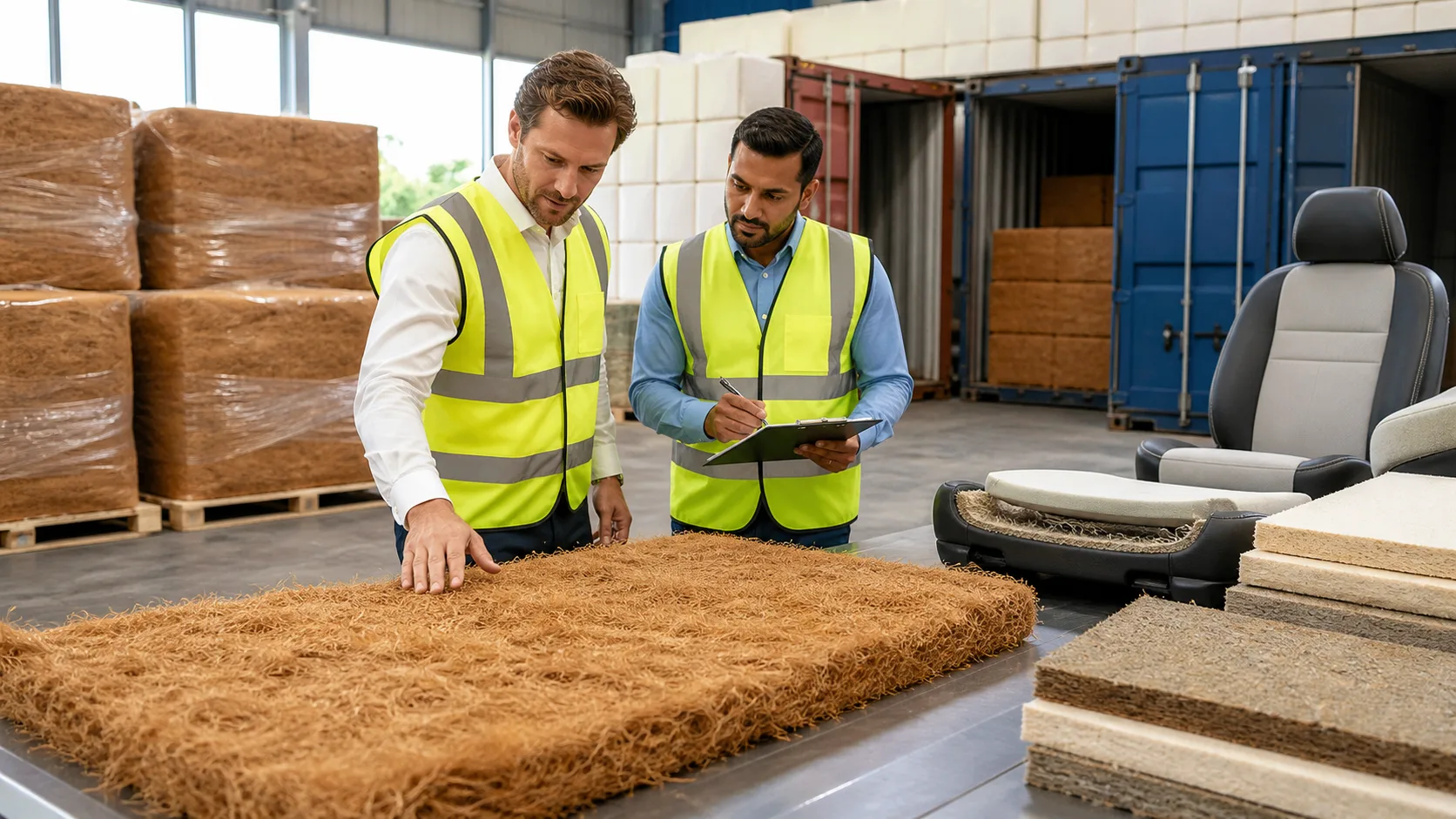
- Long coir fiber for molded automotive panels, trunk liners, and door trims
- Curled coir fiber for seat padding, mattresses, and acoustic inserts
- Coir pith for lightweight substrates, insulation mixes, or green roofing bases
- Blended biomass mixes for boards, pellets, or specialty composite cores
Each format behaves differently in your equipment. Fiber length affects flow in molds. Moisture influences drying time and risk of mold. Dust and pith levels can change how a resin wets out the fiber. This is why the end of the year is a smart time for internal alignment. Procurement, R&D, and quality teams can sit together, update specs based on recent trials, and lock in clear, testable requirements so every coconut fiber importer receives the same brief in early Q1.
Assessing Quality Systems and Product Consistency
Once you know what you need, the next step is to look hard at each importer’s quality systems. On paper, many suppliers sound the same. In real production, small differences in control show up as big swings in part failure, scrap, and line stops.
Good signs in a quality setup include:
- Formal quality management, such as ISO 9001 or industry-relevant systems
- Clear standard operating procedures for grading, drying, and packing
- Batch traceability from origin to export lot
- Incoming and outgoing inspections, not just visual sorting
For coconut fiber importers, consistency is everything. Points to check:
- Stable moisture content, so weight is meaningful and mold risk is low
- Low contamination from sand, shell, metal, or plastic fragments
- Uniform fiber length and color across bales and containers
Ask how they measure these items, how often, and what happens when a batch falls outside limits. Third-party lab testing adds another layer of confidence, especially if your fiber goes into safety-related automotive parts or structural building components.
Pilot shipments are also helpful. A limited trial batch lets your team run the fiber through actual production tools, check cycle times and scrap, and confirm you can meet your own product specs before committing to a long-term agreement.
Evaluating Sustainability, Certifications, and ESG Claims
Sustainability is now a core part of material choice, not just a nice bonus line in a brochure. Many OEMs and tier suppliers are asking detailed questions about where coconut husks come from, how workers are treated, and how waste is handled.
When you review a coconut fiber importer’s claims, look for:
- Clear sourcing stories from coconut-growing communities
- Environmental management practices that limit water and energy use
- Respect for international labor norms and worker safety
- Any relevant agriculture or environmental certifications, where applicable
Coconut processing generates many byproducts. Advanced importers find uses for these side streams so they do not go to waste. For example, husk and shell biomass can go into fuel or other coconut derivatives. This kind of circular approach can help lower the overall carbon load of your materials and support your reporting targets for the next round of sustainability rules.
A Thailand-based exporter like CP FARMERS sits close to major coconut regions, so we see every day how good sourcing and smart use of byproducts can support both local communities and global customers.
Logistics, Seasonality, and Risk Management in Global Supply
Even with perfect fiber specs and strong ESG stories, supply fails if logistics fall apart. When you assess coconut fiber importers, it helps to walk through the full route from their facility to your plant.
Important questions include:
- How close are they to export ports with good sailing schedules?
- Do they ship in bales, bags, or custom-packed containers?
- How do they handle fumigation and phytosanitary rules for your country?
- Who manages paperwork and customs steps along the way?
Seasonal patterns matter too. In tropical coconut regions, monsoon rains and storm seasons can affect husk collection, drying times, and inland transport. Peak global shipping times around year-end can stretch transit times and container availability. If your automotive or construction lines run on tight just-in-time plans, small shipping delays can create big trouble.
Risk management ideas to discuss with importers:
- Dual sourcing from more than one origin or port
- Some level of safety stock near your plant or at a regional hub
- Flexible delivery windows within your production calendar
- Regular updates on shipping status and any disruption alerts
A coconut fiber importer that speaks openly about these topics will usually be better prepared when the unexpected happens.
Building Long-Term Partnerships with Coconut Fiber Experts
Natural fibers reward long-term thinking. When you work with experienced coconut fiber importers who understand both the material and your end use, it becomes much easier to develop new composites, hit tighter specs, and respond to new rules without constant line changes.
When you meet potential partners, simple questions can tell you a lot:
- How quickly do they answer technical questions from your engineers?
- Are they open to run trials, adjust blends, or tweak moisture targets?
- Do they explain their pricing structure with clarity?
- Are they willing to share ideas on waste reduction and joint sustainability goals?
At CP FARMERS, we focus on long-term B2B relationships. Our team works with food, industrial, and energy clients that care about steady quality and clear logistics. For automotive and construction buyers planning ahead, now is a good time to review current coconut fiber suppliers, fill any gaps in specifications, and connect with partners who can support reliable, sustainable supply for the coming production cycles.
Secure Reliable Coconut Fiber Supply For Your Next Order
As experienced coconut fiber importers, we provide consistent quality and dependable delivery for your growing or manufacturing needs. At CP FARMERS, we work closely with you to match the right fiber specifications to your project and volume requirements. If you are ready to discuss pricing, logistics, or custom solutions, simply contact us and our team will follow up with clear next steps.